


When deciding whether to use a semi-automatic or fully automatic packaging machine on a production line, weigh the need associated with packaging operations because it relates to employee interaction and skill, quality, safety, productivity and profitability.
As robotics and automation continue to evolve in the production line, individual manufacturing departments can reduce costs, provide more consistent quality products and increase profit margins, but there is a question, how many automated machines do you need on your production line?
Simply eliminating workers and oversight on the line does not always bring about greater efficiency. Manufacturers should understand the requirements of their lines to select the right level of automation. Will semi- or fully automated packaging equipment meet their needs?
Differences between semi- and fully automated lines
Depending on its use, full or partial automation can greatly assist manufacturers in achieving their business goals. The differences between the two hinge on one major factor: employee interaction. Fully automated lines operate with little to no workforce involvement, while semi-automated lines rely on some employee interface to maintain operations.
There are advantages and disadvantages depending on the circumstances. Both semi-automated and fully automated operations have a proven track record of reducing production costs, increasing profits and improving product quality.
Considerations of semi-automation
Semi-automated manufacturing lines give way to a collaborative model that allows automated robots and equipment to operate alongside employees on the manufacturing floor. While employee interaction along a packaging line requires consideration for human error and safety concerns, it can also help manufacturers increase line flexibility.
Employees can think critically about problems that can occur on the manufacturing floor that are beyond what any machine is equipped to handle. Instead of awaiting feedback from machines themselves, a skilled workforce has the ability to work with equipment to ensure any machine stoppages are addressed in real time, rather than relying on machinery to properly correct errors on their own.
This model provides the opportunity for continuous improvements along the line for smooth production and an increase in efficiency. However, a major challenge among manufacturers across various industries in the Unites States today is acquiring, developing and retaining skilled employees, which can necessitate greater steps toward a fully automated line.
Considerations of full automation
By implementing a fully automated system, manufacturers eliminate significant levels of workforce on the production line. These processes are especially suitable for the pharmaceutical and meat and poultry industries. According to a report from FDAnews, human error accounts for nearly 80% of deviations in the pharmaceutical and related manufacturing industries. By fully automating product lines and reducing workforce interaction, pharmaceutical manufacturers can continue to improve such deviations and ensure customer satisfaction.
In the meat and poultry industry, manufacturers focus mainly on quality and sanitation. By removing the human element, food processors can help decrease the risk of product contamination. Fully automated lines can help ensure that manufacturers are complying with the latest Food Safety Modernization Act (FSMA) regulations and help improve product quality and safety.
Additionally, fully automated lines can help to guarantee safety of the workforce on the manufacturing floor. As automation equipment design improves to allow for safer employee interfaces, the workforce can increasingly interact with equipment without compromising safety and skilled workers are able to interact with automation equipment remotely. Fully automated equipment can help increase employee safety on the line without compromising product quality.
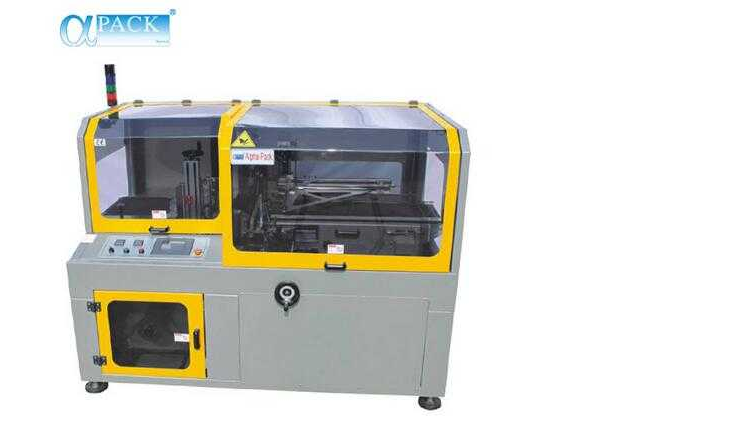
APSS-5022 Fully Automatic Food Sealing Heat Shrink Packaging Machine
This series of packaging machine is designed for high speed fully automatic sealing and shrink packing. The product flow is in line, also the wrapping cycle is sensor-controlled to facilitate manual or automatic loading.
Features:
1. Constant heated sealing blades can perform continuously, which enables no limit of product length and high capacity of up to 60 bags per minute.
2. Auto photocell infeed system provides both horizontal and vertical choices to suit various product sizes.
3. Product changeovers can be easily realized by hand wheel adjustments, no elements need to be replaced.
4. Machine produces an enclosed pack with sealing on 3 sides.
5. Applicable for PE, POF and other center-folded shrink films, especially for POF shrink film packing.
6. Automatic Waste Strip wind up design.
7. Motor-driven Infeed conveyor and free roller Outfeed conveyor are options for fully automatic application.
8. With CE certification
