 Special Topic Home

Category
Products News
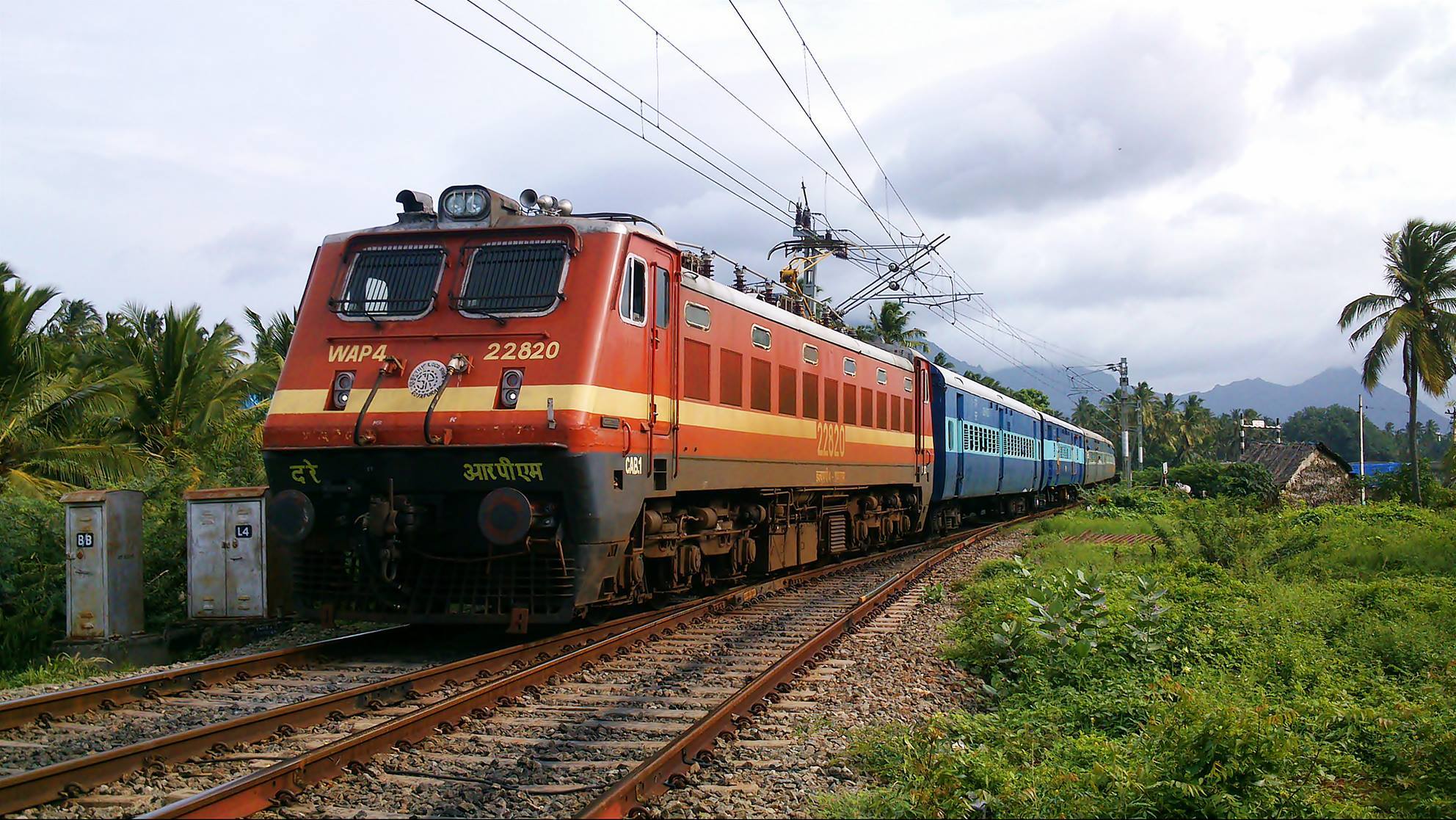 Some Details of Freight Wagons of Indian Railways
Related searches
Supplier Searches
Home > Products News
Some Details of Freight Wagons of Indian Railways
2017/7/4 11:25:40
.jpg)
The main business of the Indian Railway (IR) is freight and passenger transport. It has recently joined us, the billions of tons of clubs in China and the Russian railways. In 2013-14, we shipped 1054 tons of cargo and shipped about 8.5 billion passengers to various destinations across the country.
IR earned about 72% of its revenue (about 83.5K crores) from freight traffic in 2012-13. The profits from the Freight business are used to subsidize the passenger business. During the year 2010-11 there was a loss of 20.50K Crores on the passenger business. In all IR carries about 35-36% of the modal freight share by mostly carrying bulk commodities like coal, steel, cement, fertilizer, POL and food grain. The operations are becoming more efficient with the average speed of the freight train at 25.5 Kmph in 2012-13 and the net load per train at 1732 tonnes.
What are freight wagons?
These are unpowered vehicles used for transporting cargo. These are fitted with standardized couplers, air brake hoses etc enabling different type of wagons to be coupled together in the form of a train. Most of the coal carrying trains have about 59 wagons and a brake van for the guard. The limitation in length is due to the length of the loop lines at stations.
Initially Railways had four wheeler wagons but with changes in technology increasing number of specialized wagons have been developed which have a higher payload to tare ratio. This signifies the weight of commodities carried by the wagon to its own weight. Since 1990 IR has stopped carrying single wagon consignments, these are carried mostly in containers.
Why is Rail Transport good for the Country?
If we compare the energy efficiency of the different modes of transport railways is 75-90% more efficient in freight movement and about 5-21% in passenger transportation. Even though freight rates of IR are amongst the highest in the World yet it costs about two rupees less per net tonne Km in freight. Rail transport emits 17 gram and 28 gram CO2 equivalent per Passenger KM and NTKM as compared to 84 gram and 64 gram respectively by road. Railways are far safer than the road. For passenger and freight transport, road accident costs are 45 times and eight times higher than rail.
Since the freight and the passenger trains share the same network the slower moving freight trains have to give way to the faster passenger trains. This is more prevalent on the golden quadrilateral linking Delhi, Mumbai, Chennai and Kolkata which carries about 60% of the freight and passenger traffic. In order to bridge this gap IR has tried out running longer freight trains to reduce the number of trains in the sections, used technology such as distributed power and end of train telemetry and tried to overpower the trains by using two or three locomotives. Apart from this IR is also running double stack container trains as these require one less train to run saving crucial line capacity, crew and are about 40% more fuel efficient per container KM. Another initiative in this direction is the freight corridor which will help speed up the passenger trains as well by shifting the freight traffic from this congested network.
As a good citizen, we should try to use more public transport, preferably the railroad, only when we need to travel. We should remember that our journey on passenger trains is subsidizing and we have a responsibility to reduce the overall space for our personal travel and the burden on the goods.
Article from:
https://indianrlynews.wordpress.com/