 Special Topic Home

Category
Products News
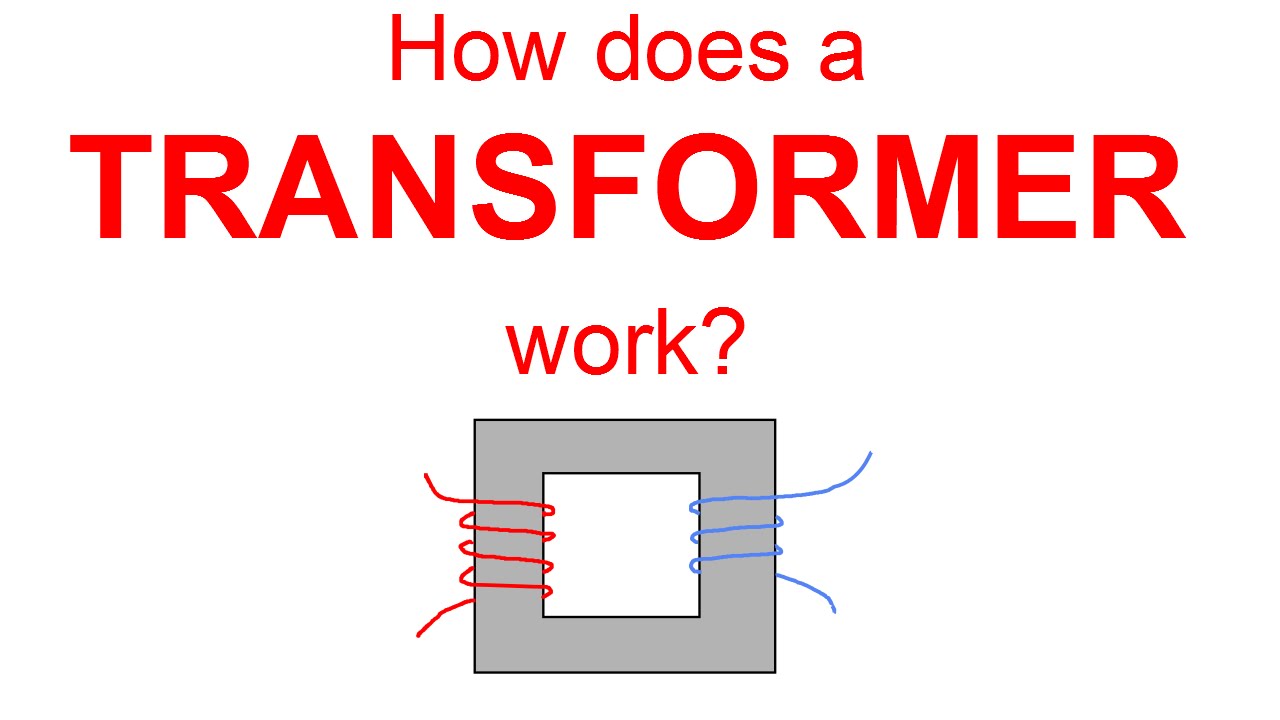 How does a transformer work?
Related searches
35kv power transformer
electric furnace transformer
electrical transformer for sale
high current transformer
Supplier Searches
Home > Products News
Several Ways for Cooling Power Transformer
2017/6/19 14:48:22
.jpg)
As the size and capacity of the transformer increases, the associated cooling arrangement becomes more powerful and complex. Thus, by definition, a transformer cooling system is an arrangement for a power transformer that limits the amount of heat generated in a safe value by properly dissipating the heat generated. Different types of transformers use different cooling systems, as described below.
Generally, two types of transformers are there according to the use of insulating oil, namely Dry Type Transformers and Oil Immersed Type Transformers. In oil immersed type, the transformer core is immersed into the transformer oil. Different types of cooling are needed for these two categories. In dry type transformers, air is used as the coolant medium but in oil immersed transformer (as the size and ratings both are high), both air and transformer oil are used as the coolant medium.
Air Natural Type:
This cooling method is used in dry type transformer with smaller ratings. As the name implies, the natural circulation of atmospheric air is used in this technique. This type of transformers is also referred as self-cooled transformer. When the transformer is operated in full load, then the temperature of the transformer becomes greater than the ambient air temperature. So, by convection process, the light and heated air gets replaced by the heavy and comparatively cool surrounding air. In this way, the generated heat is dissipated via the natural air circulation process. But this type of cooling arrangement provides satisfactory operation for low voltage transformers only.
Air forced type:
This cooling method is also used in dry type transformer but the application is also implemented in oil immersed transformers. As the name implies, in addition with natural air circulation, cool air with high velocity is provided to the core. High speed fans are provided with the transformer, and by the rotation of this fan high velocity of air is subjected to the transformer. This additional air force ensures quicker heat dissipation of the transformers. The fans are automatically controlled, that is when the temperature of the transformer core goes beyond the safe limit than all the fans are switched ON. Air forced cooling method provides better performance than natural air cooling, but additional cost is associated for the fans.
Oil Natural Air Natural (ONAN) Cooling Of Transformer:
This cooling system is used in oil immersed type transformers. This is the simplest way of cooling of oil immersed transformers. We know that, the transformer core is immersed in transformer oil. When the transformer is heated up, then temperature of oil near to the transformer core is also raised. So, the light and heated oil flows in upward direction and comparatively cool and heavy oil takes the vacuum places by natural convection process. And the heated oil releases its temperature into the atmosphere. In this way, a natural oil circulation cycle is generated and this cycle continues until the transformer temperature is tapped into a safe limit. In this method, the surface area of the oil tank is usually larger, as more surface area provides more quick heat dissipation process. But to provide more surface areas, several hollows tubular plates are attached with the transformer and they are termed as radiator. When the hot oils are circulating through the radiators, they get more surface area so the cooling rate is much higher. Also the light and heated air gets replaced by the heavy and comparatively cool surrounding air by natural process. In this way, the generated heat is dissipated via the natural air circulation process as well as natural oil circulation.
Oil Natural Air forced (ONAF) Cooling of Transformer:
The word ‘forced’ signifies that, air is forcefully applied to the transformer. High speed fans are provided with this type of cooling system. In larger rated oil immersed transformers, natural air and oil cooling is not sufficient. So, additional air force is applied to the radiator by means of those fans and this method provides quicker heat dissipation of the power transformers as compared to natural oil and air cooling. All fans are automatically controlled, whenever the temperature of the transformer goes beyond the safe limit than all the fans are switched ON. But here the oil circulation process made by natural convection, that is no oil pumps are provided for this type of cooling. This method provides better performance than natural oil and air cooling, but there is an additional cost due to the fans.
Oil forced Air forced (OfAf) Cooling of Transformer:
Actually, for very large rated oil immersed transformers, heat generated is quite high. Therefore, some special cooling techniques are applied in order to provide sufficient heat dissipation. In Oil forced Air forced cooling system, both oil and air are circulated at high speed by some additional configuration. High speed fans are connected to provide additional air flow of high velocity and oil pumps are provided to circulate the oil at high velocity. So, hot oil is circulated inside the main transformer tank at larger velocity, so the rate of cooling is further increased. Therefore, in oil forced air forced cooling system; both the oil and air are forcefully applied to achieve more fast cooling process.
Oil Directed Air forced Cooling of Transformer:
This is the updated version of Oil forced Air forced cooling method. Here the Oil and Air both are applied forcefully, but the hot oil follows a specific route for flowing. Convection channels are made closer to the winding of the transformer and the transformer oil is passed through those channels. In this way, superior heat dissipation is occurred.
Oil forced Water forced Cooling of Transformer:
Water is far better coolant than atmospheric air. So, in this method water is used as the oil coolant instead of natural air. Here, the flow of hot oil is directed to a heat ex-changer where water shower is applied. So, here the oil is cooled at faster rate than natural air cooling.
Therefore, from the above discussion, we understand the need for power transformer cooling and understand the various types of transformer cooling.
Article from:
http://top10electrical.blogspot.com/